
Knowledge base
How Wallet Password Recovery Works: Methods, Feasibility and Honest Limits
How encrypted wallets protect passwords, what a recovery search actually does, and when such a search is realistic - and when it is not.
Short answer
Wallet password recovery tests candidates against the encrypted file; a remembered length, character set or base word narrows the search long before any assessment is needed.
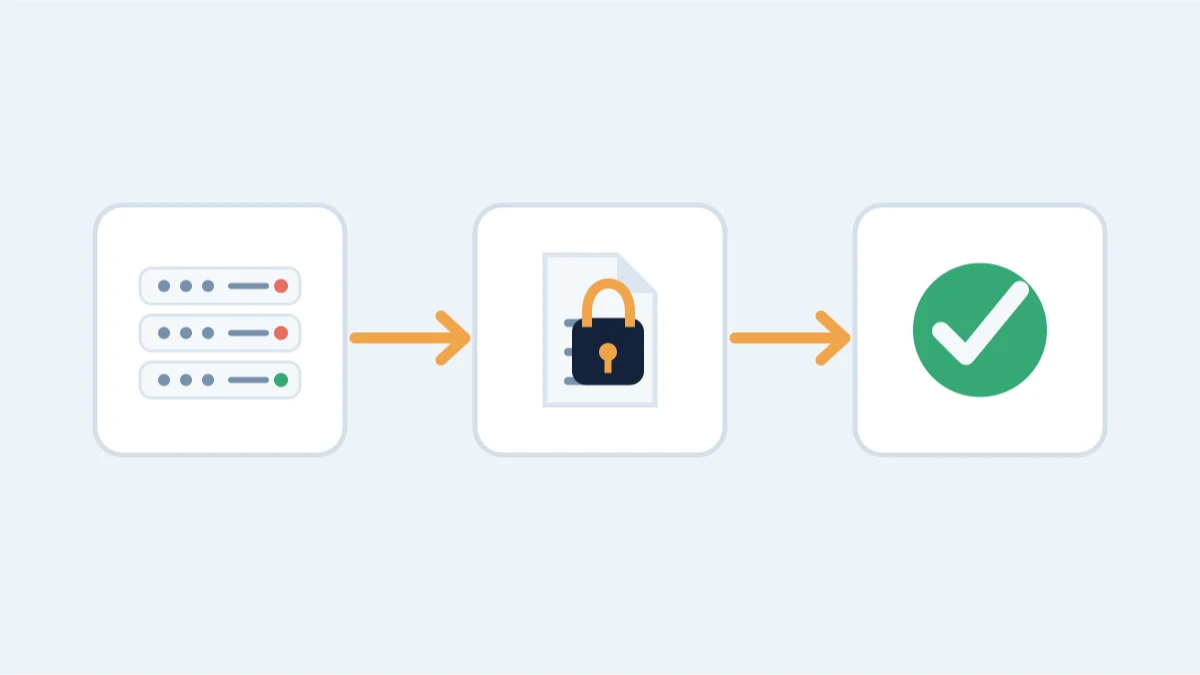
Password recovery tests candidates against the encrypted wallet file, and what you remember about the password decides how large that search is. This reference explains the mechanism at the level a recovery specialist needs - detailed tool configuration belongs to specialist password documentation, not here.
How encrypted wallets protect passwords
- A password is never stored. The wallet derives a key from it using a key-derivation function (KDF) with a random salt, then encrypts the key material with that derived key.
- The KDF is deliberately slow so every candidate password is expensive to test: Bitcoin Core wallet.dat applies thousands of derivation rounds, Ethereum keystores use scrypt or PBKDF2 with parameters stored in the file, and Litecoin Core uses the same derivation as Bitcoin Core.
- Reversing the encryption is not how recovery works: the search tests candidates through the same KDF the wallet used.
What a search needs
- An exact copy of the file, never the original. Record its hash first.
- Everything you remember: length, structure, words, dates, capitals, substitutions, password habits from that era.
- The wallet format, which decides the KDF and therefore how expensive each test is.
Where the format allows it, the search runs against an extracted hash of the encrypted material, so the file itself never has to leave your hands.
Feasibility: the honest scale
- The encrypted file is the recovery target, and what narrows the search is specific: a remembered length rules out every wrong-length guess, and a remembered character class - all lowercase, no symbols, digits only - rules out everything outside it.
- You remember fragments (a word, a year, a habit): the search grows with every unknown character, but stays bounded.
- A long, random password creates a much larger search space. The assessment has to account for the real entropy, the KDF cost and the resources available.
- No file and no backup: there is nothing to search; a password cannot be recovered from memory alone.
How recovery should run
- On a copy, offline, on controlled hardware, never in an online tool that asks you to upload the file.
- With honest limits: a professional service tells you when a search is not realistic before you commit, and never before a signed agreement.
- No recovery, no fee is the only pricing model consistent with an honest search.
Specialist tooling (candidate generation, masks, benchmarks) is intentionally out of scope for this reference; the password-focused documentation goes deeper into what is feasible and how the formats work.
Still locked out?
The first assessment is free, and it asks for no wallet secrets. Describe what you still have — a file, a phrase, a device, or what you remember — and we’ll tell you whether recovery is realistic. You only pay if the recovery succeeds.