
Knowledge base
Hardware Wallet Recovery Concepts: Device vs Seed, PIN vs Passphrase
A hardware wallet holds keys, not coins. The seed recreates the wallet, the PIN protects the device, and the passphrase hides it. This reference maps those concepts to what is recoverable.
Short answer
A complete wallet backup and any required passphrase can restore access in a compatible wallet. Without that backup, the original device may still offer a recovery route, depending on its model, firmware, condition and the access details you still have.
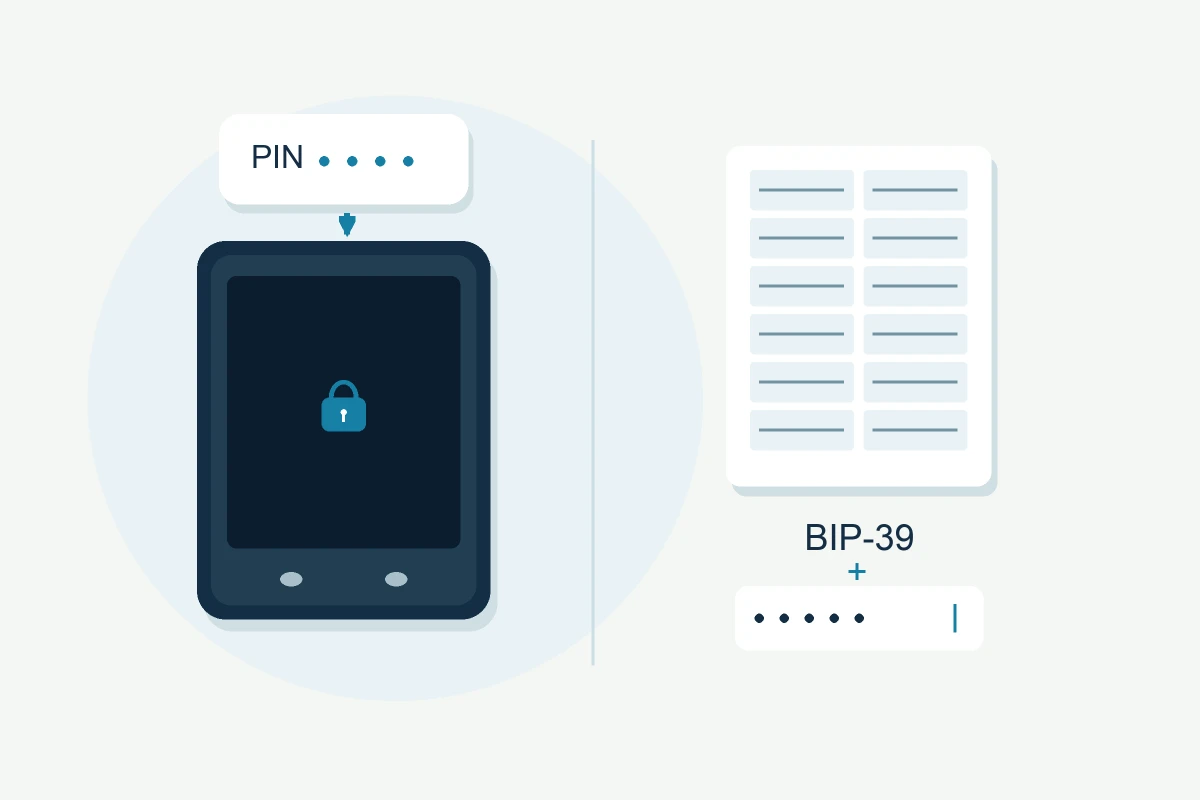
Hardware wallet problems are usually not lost funds: the coins live on the blockchain, and the device only holds the keys. What is recoverable depends on which of the four concepts you still have: the seed, the device, the PIN or the passphrase.
Device vs seed
- The device holds the keys; the seed phrase (usually 12 or 24 BIP39 words) recreates the entire wallet on any compatible device
- A lost, broken or wiped device is recoverable with the seed: buy or borrow a compatible device and restore
- A wiped device with no recovery phrase and no other backup cannot restore access: the keys have been erased
PIN vs passphrase
- The PIN unlocks the device itself. Wrong attempts can lock or wipe it, but the seed restores everything a wipe removes
- The passphrase (sometimes called the '25th word') is an optional string combined with the recovery phrase to derive another wallet. It need not be a single word; restoring that wallet requires the exact passphrase as well as the recovery phrase
- A forgotten passphrase may be recoverable by testing candidates with the recovery phrase and checking the derived wallet against known data, such as a receiving address. Remembered words, length or patterns can narrow the search; feasibility depends on the candidate set and the available verification data
Hidden wallets and Shamir
- A 'hidden wallet' is just the wallet derived with a passphrase; it looks like an empty device until the passphrase is entered
- Shamir (SLIP-39) splits a master secret into shares. In a 2-of-3 setup, any two complete, valid shares can reconstruct it; one share alone cannot
- The shares are device-independent and can restore into compatible software
Migration and compatibility
- BIP39 seeds move between hardware brands: Ledger, Trezor and BitBox all restore from a standard BIP39 phrase (check each device's import flow)
- After a restore, the derivation path and address type must match the original wallet (see the derivation reference); a wrong type shows a zero balance
- Before migrating, verify a receiving address on the new device matches the old wallet
What is impossible
- If the device has been wiped and no recovery phrase or other copy of the secret material survives, there are no remaining keys on that device to recover
- Funds already sent away: transactions cannot be reversed
Safety
- Never enter a hardware seed into a website, an app that 'checks' it, or any recovery tool: the device exists to keep the seed offline
- If you type the seed somewhere, the wallet is exposed from that moment on: migrate to a fresh wallet after recovery
Still locked out?
The first assessment is free, and it asks for no wallet secrets. Describe what you still have — a file, a phrase, a device, or what you remember — and we’ll tell you whether recovery is realistic. You only pay if the recovery succeeds.