
Knowledge base
What Is a Fork? Hard Forks and Soft Forks Explained
A fork is a change in a blockchain’s rules. Hard forks create a separate chain; soft forks stay compatible. Here is what that means for your coins and your wallet.
Short answer
A fork is a change in the rules a blockchain network follows; hard forks split the chain, soft forks do not.
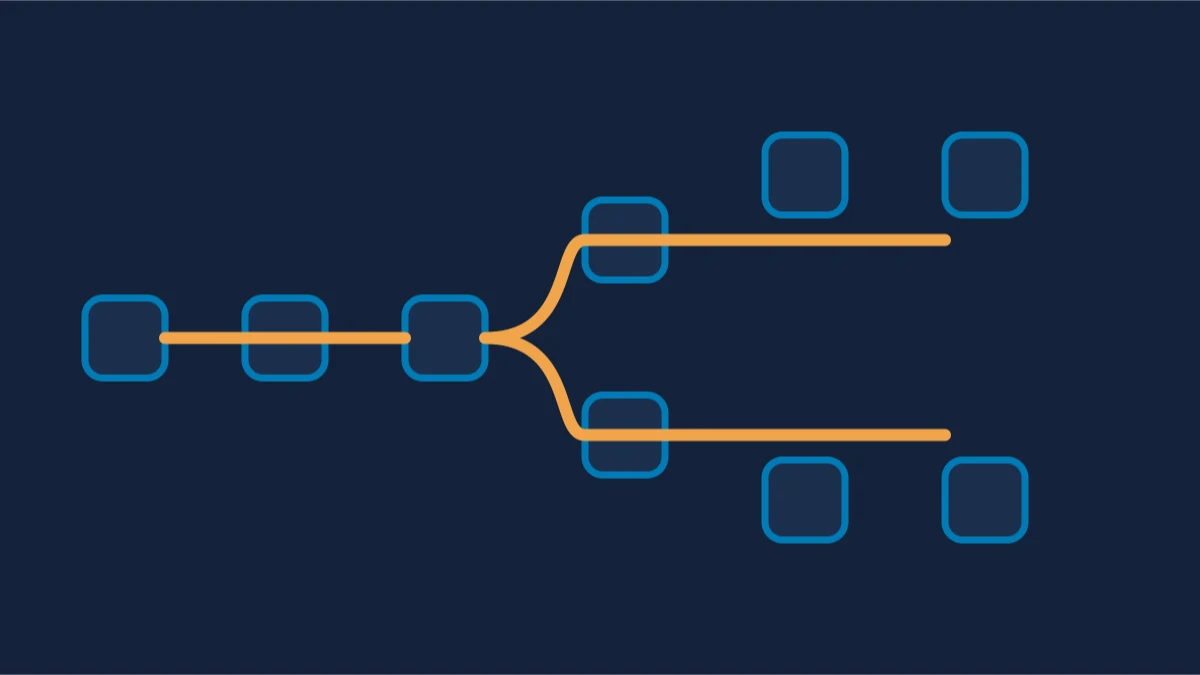
A fork is a change in the rules a blockchain network follows. When a significant part of the network runs different rules, the chain can split, and your wallet can suddenly show a different balance, or none at all. Knowing what a fork is helps you tell the difference between funds that moved, funds that are on another chain, and a wallet that is simply looking in the wrong place.
What a fork actually is
A blockchain is a shared ledger maintained by nodes — computers running the network's software. That software defines the rules: block size, transaction format, how new coins are created. A fork is what happens when those rules change and the network does not agree on the change.
- A soft fork adjusts the rules in a way that stays compatible: old nodes can still accept the new blocks, and the network keeps one chain. Examples on Bitcoin include SegWit (2017) and Taproot (2021).
- A hard fork changes the rules in a way old nodes cannot accept. The chain splits into two separate networks that share their history up to the split. Examples include Bitcoin Cash (2017) and Bitcoin SV (2018), which split from Bitcoin.
What a fork means for your coins
The key fact: your keys control the coins on every chain that shares your wallet's history. After a hard fork you may hold coins on both chains, even if your wallet only shows one. The coins on the other chain are not lost — they are on a different network and are spendable with the same keys through a wallet that supports that chain (or a split tool).
This is also why "free fork coins" scams exist. You never need to enter your seed phrase or private keys into a website to claim coins on another chain — the same keys already control them. Any site that asks for your phrase is trying to take your wallet, not give you coins.
Why your wallet can show zero after a fork
Most post-fork "missing balance" cases are display problems, not losses:
- The wallet follows one chain and does not show the other chain's balance.
- The wallet needs an update; an old client may fail to sync or show the wrong chain.
- The coins are split across addresses (for example, after the Bitcoin Cash split) and the wallet is not scanning the right derivation path.
If a balance disappears right after a fork, check the address on a block explorer first, update the wallet, and check whether another chain exists for that coin. Our guides on a zero balance after restore and on derivation paths cover the rest.
When a fork is a recovery case
A fork becomes a recovery case when you cannot reach the funds even with the right chain and wallet: the wallet file will not open, the password is gone, the recovery phrase is incomplete, or the old software is no longer supported. The same recovery rules apply as with any wallet. Work starts from material such as a wallet file or encrypted backup, recovery phrase, device or exported keys. Password clues matter only when usable encrypted wallet data still exists.
FAQ
What does a hard fork mean for my coins?
You may hold coins on both chains, controlled by the same keys. A wallet that supports the other chain (or a split tool) can access them; the balance is not lost.
Do I get free coins from a fork?
If you held coins at the moment of the split, the other chain's coins are yours via the same keys. You never need to enter your seed or keys anywhere to claim them — a site that asks is a scam.
Why does my wallet show zero after a fork?
Usually the wallet is looking at one chain, needs an update, or scans the wrong path. Check the address on a block explorer before assuming the funds are lost.
Still locked out?
The first assessment is free, and it asks for no wallet secrets. Describe what you still have — a file, a phrase, a device, or what you remember — and we’ll tell you whether recovery is realistic. You only pay if the recovery succeeds.