
Knowledge base
Legacy Wallet Timeline: Software, Formats and Shutdowns (2011–2020)
Wallet software from the early years used formats and backup models that no longer exist. This timeline maps the era, the format and what recovery means today.
Short answer
The wallet software from 2011–2020 used formats and seed standards that differ from today’s: seeds were rare, keypools mattered and discontinued downloads are now a malware risk. Identifying the era tells you which format you hold and what recovery needs.
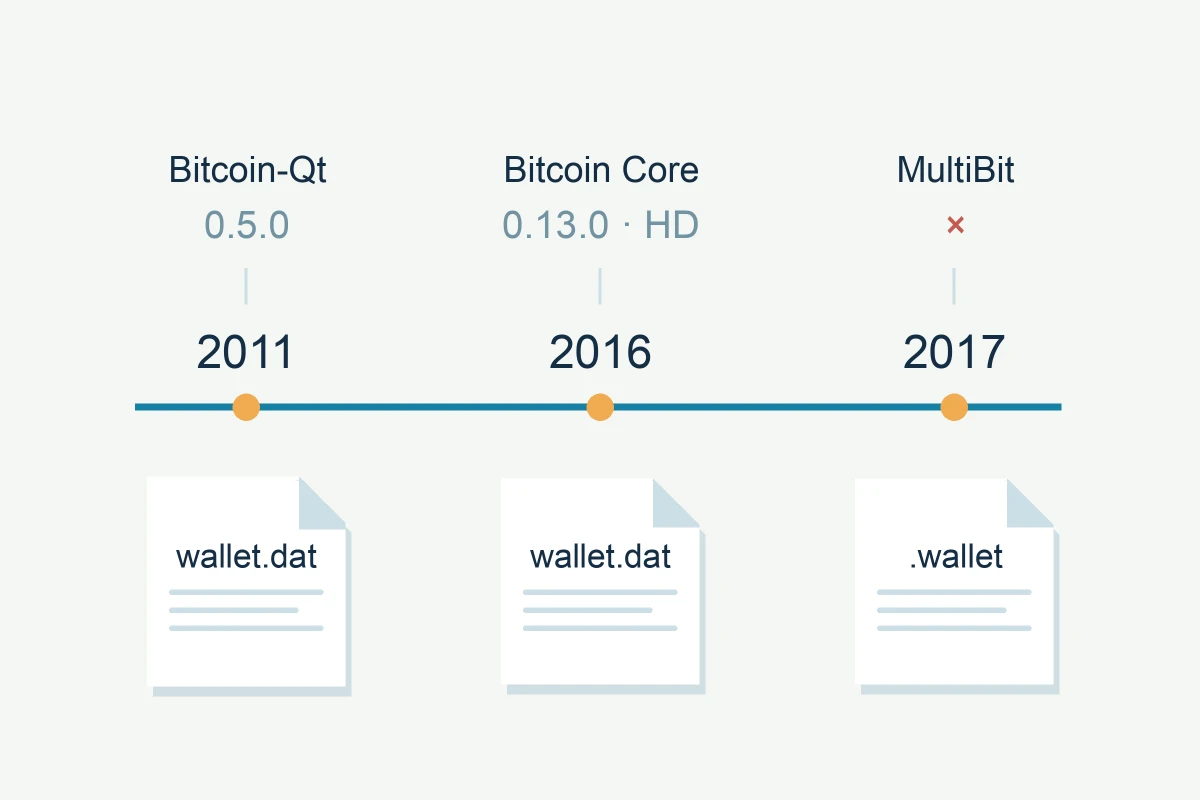
The wallet software of 2011-2016 predates today's standards: seeds were rare, keypools mattered, and downloads for discontinued software are now a malware risk. Knowing the era tells you which format you are dealing with.
The timeline
- 2011-2013: early Bitcoin Core / Bitcoin-Qt. wallet.dat files, non-HD keypools, no standard seed. Recovery depends on the file and its password.
- 2013: MultiBit Classic arrives (flat .wallet files); Electrum 1.x uses 12-word seeds with an older word encoding; the version-hash system begins with Electrum 2.0; Armory offers deterministic wallets and offline signing.
- 2014: the Ethereum presale (2014) creates a one-off keystore format; Blockchain.com legacy wallets are common; MyEtherWallet follows in 2015 with UTC/JSON keystores.
- 2015-2016: MultiBit HD (12-word seed, AES-encrypted master seed), Electrum 2.x (new seed system), Mist (early Ethereum desktop), Jaxx and Exodus arrive.
- 2017-2020: Coinomi, Bread/BRD, Mycelium and many mobile wallets mature; Bitcoin Core moves to descriptor wallets (around 2020-2021); SegWit (BIP49/BIP84) becomes the default for new wallets.
- Shutdowns: MultiBit is discontinued (2017), BRD/Bread shuts down (2023), Toast and several small wallets close; each shutdown makes the official download a risk and the format the only asset.
What legacy means for recovery
- Old wallets often have no seed at all: the wallet file (and its password) is the recovery material
- Early Electrum seeds are not BIP39 and fail BIP39 checksums; MultiBit HD words are BIP39, but derivation starts at m/0h, so another wallet restores them to a zero balance
- Pre-HD backups contain independently generated keys, including a reserve of unused keys. If a later key is absent from the backup, rescanning cannot recreate it; another wallet file or backup containing that key is needed
- Downloading discontinued software from search results is a known way to get malware; work from copies and official archives only
- An old format is still a working recovery target: the encryption scheme is known, which is what makes password and seed recovery possible
Still locked out?
The first assessment is free, and it asks for no wallet secrets. Describe what you still have — a file, a phrase, a device, or what you remember — and we’ll tell you whether recovery is realistic. You only pay if the recovery succeeds.